
Best Dental Clinic in Moshi, PCMC: Complete Guide to Dental Care
- +91 9075473657
- healthandsmilesdentalclinic@gmail.com
- Morning 10.00am-2.00 pm || Evening 5.00pm - 9.00pm
Dental Clinic
August 28, 2026
10 Signs You Need a Dental Check-Up: Protect Your Smile Before Problems Begin

Written By Dr. Gargi Patil
Periodontist & Implantologist BDS | MDS – Periodontology & Implantology
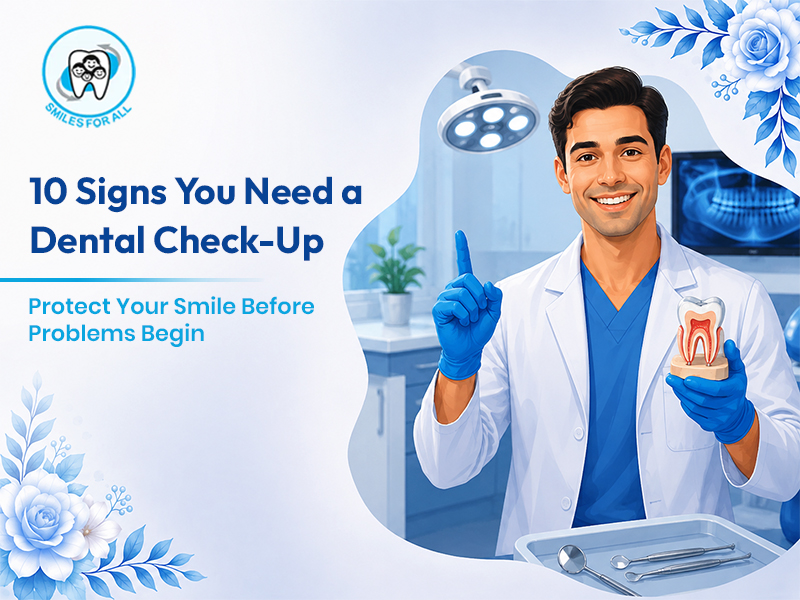
A healthy smile does not always mean that everything is fine beneath the surface. Some dental problems can develop gradually, while others may begin with small symptoms that are easy to ignore. Regular dental check-ups can help identify concerns early and support better long-term Oral Health.
If you have been delaying a Dental Checkup because your teeth do not hurt, it may be time to reconsider. A professional Dentist Consultation allows your dentist to examine your teeth, gums, bite, and overall oral health and recommend appropriate care.
Here are 10 signs you may need a dental check-up.
1 Persistent Tooth Pain
Tooth pain is one of the clearest signs that you should see a dentist. Pain may be related to tooth decay, infection, gum problems, a damaged tooth, or other dental conditions.
Do not rely on painkillers to manage ongoing discomfort without finding the cause. Persistent toothache should be evaluated by a dental professional, particularly if it lasts more than a couple of days or is accompanied by swelling, fever, pain when biting, or a bad taste in the mouth.
Early evaluation can help determine whether you need treatment such as a filling, root canal treatment, or another form of dental care.
2 Bleeding or Swollen Gums
Healthy gums should not regularly bleed during brushing or flossing.
Bleeding, red, swollen, or tender gums can be signs of gum inflammation. If gum problems are allowed to progress, they can affect the tissues and bone supporting your teeth and may eventually contribute to loose teeth and tooth loss.
If you notice persistent gum bleeding, schedule a dental examination rather than ignoring the symptom.


3 Increased Tooth Sensitivity
Do your teeth hurt when you drink something hot, cold, sweet, or acidic?
Occasional sensitivity can have different causes, but persistent or worsening sensitivity deserves professional evaluation. It may be associated with enamel wear, gum recession, decay, or other dental concerns.
During a Dentist Consultation, your dentist can examine the affected teeth and determine the likely cause before recommending suitable treatment.
4 Persistent Bad Breath
Bad breath that continues despite regular brushing, flossing, and cleaning your tongue may be a reason to schedule a dental check-up.
Persistent bad breath can sometimes be associated with oral hygiene problems, gum disease, dry mouth, or other oral conditions. NIDCR lists persistent bad breath among symptoms associated with periodontal disease.
A dental examination can help identify whether the source is related to your teeth or gums and whether professional cleaning or further treatment is needed.
5 Loose or Shifting Teeth
Adult teeth should not become loose without a clear reason.
Loose or shifting teeth can be associated with advanced gum disease, which can damage the tissues and bone supporting the teeth.
If you notice that a tooth feels different when biting, appears to be moving, or has changed position, arrange a dental appointment promptly.
6 Swelling, Tenderness, or a Dental Abscess
Swelling around a tooth, gum, cheek, or jaw should not be ignored.
Pain and swelling may indicate an infection or another dental problem that requires professional assessment. Dental infections can become more serious if left untreated.
If swelling makes it difficult to breathe, swallow, or speak, seek urgent medical attention.
7 A Cracked, Chipped, or Damaged Tooth
A cracked or chipped tooth can occur because of an accident, biting something hard, tooth grinding, or weakened tooth structure.
Even when the damage does not cause immediate pain, a dentist should evaluate the tooth. Depending on the condition, treatment may range from monitoring to a filling, crown, or other restorative procedure.
Early assessment can help prevent further damage.
8 Difficulty Chewing or Pain When Biting
If chewing has become uncomfortable or you experience pain when biting down, it is worth having your teeth examined.
This symptom may be associated with tooth decay, a damaged tooth, gum disease, infection, or problems involving the bite. A dental examination can help determine the underlying cause and appropriate treatment.
Do not change the way you chew for a long period simply to avoid discomfort. Persistent changes in chewing ability deserve professional attention.
9 Mouth Sores or Unusual Changes That Do Not Heal
Most minor mouth sores heal within a relatively short period. However, if you notice a persistent sore, unusual patch, lump, swelling, or other change in your mouth that does not improve, mention it to your dentist.
A dental professional can examine the area and determine whether further evaluation is necessary.
10 It Has Been Too Long Since Your Last Dental Visit
You do not need to wait for pain before seeing a dentist.
Routine dental visits are an important part of Preventive Dentistry. During a check-up, your dentist can examine your teeth and gums, identify early concerns, assess your oral hygiene, and recommend professional cleaning or other preventive care when appropriate.
The ideal frequency of dental visits is not identical for everyone. Your dentist can recommend an appointment schedule based on your oral health, risk factors, and individual needs. NIDCR recommends routine dental check-ups and professional cleaning as part of maintaining healthy teeth and gums. N
11 Why Regular Dental Check-Ups Matter
Many people visit the dentist only when they experience pain. However, prevention is an important part of maintaining long-term Oral Health.
Regular examinations can help your dentist identify problems before they become more complicated. Dental decay, gum disease, plaque buildup, and other concerns may develop without obvious symptoms in their early stages.
Professional dental care works alongside good daily habits such as brushing twice a day with fluoride toothpaste and cleaning between your teeth regularly.
12 What Happens During a Dental Check-Up?
A dental check-up generally involves an examination of your teeth and gums. Depending on your symptoms and individual needs, your dentist may also assess your bite, look for signs of decay or gum disease, and recommend additional diagnostic tests when necessary.
Your dentist may also discuss:
- Brushing and flossing habits
- Gum health
- Tooth decay risk
- Dietary habits
- Tooth sensitivity
- Existing dental restorations
- Preventive treatment
- Future dental care needs
The goal is not simply to treat problems but to help you maintain a healthy mouth over the long term.
13 Preventive Dentistry: Protect Your Smile Before Problems Begin
Preventive Dentistry focuses on reducing the risk of dental problems and identifying concerns early.
A strong preventive dental routine includes:
- Brushing twice daily with fluoride toothpaste
- Cleaning between your teeth regularly
- Limiting frequent sugary foods and drinks
- Drinking water regularly
- Avoiding tobacco products
- Scheduling routine dental check-ups
- Seeking professional advice when you notice changes in your teeth or gums
Good daily oral hygiene helps remove plaque, while professional dental care can address tartar and identify problems that may not be obvious at home.
12 Dental Check-Up at Health n Smile Dental Clinic Moshi
If you are experiencing tooth pain, bleeding gums, sensitivity, persistent bad breath, loose teeth, or another change in your mouth, a professional dental examination can help determine what is causing the problem.
Health n Smile Dental Clinic Moshi provides dental care focused on maintaining healthy teeth and gums and addressing dental concerns with appropriate treatment.
If you are searching for a Dental Checkup in Moshi, a timely Dentist Consultation can be an important step toward protecting your smile.
Do not wait until a small dental concern becomes a bigger problem. Book your dental check-up and take a proactive step toward better Oral Health.
12 What Happens During a Dental Check-Up?
A dental check-up generally involves an examination of your teeth and gums. Depending on your symptoms and individual needs, your dentist may also assess your bite, look for signs of decay or gum disease, and recommend additional diagnostic tests when necessary.
Your dentist may also discuss:
- Brushing and flossing habits
- Gum health
- Tooth decay risk
- Dietary habits
- Tooth sensitivity
- Existing dental restorations
- Preventive treatment
- Future dental care needs
The goal is not simply to treat problems but to help you maintain a healthy mouth over the long term.
Final Thoughts
Your mouth can sometimes give you warning signs before a dental problem becomes more serious. Persistent tooth pain, bleeding gums, sensitivity, bad breath, loose teeth, swelling, damaged teeth, chewing difficulties, persistent mouth changes, and missed dental visits are all reasons to consider a dental check-up.
Regular dental care combined with good home hygiene can support healthier teeth and gums for years to come.
If you have noticed any of these signs, consider scheduling a Dental Checkup at Health n Smile Dental Clinic Moshi.
Your smile deserves preventive care—not just emergency treatment.
FAQs
How often should I get a dental check-up?
The appropriate frequency depends on your individual oral health and risk factors. Your dentist can recommend a schedule that is appropriate for you.
Should I see a dentist if my gums bleed?
Yes. Persistent bleeding gums should be evaluated by a dental professional because bleeding can be a sign of gum inflammation or disease.
Is tooth sensitivity a reason to visit a dentist?
Persistent or worsening sensitivity should be discussed with a dentist so the underlying cause can be identified and treated appropriately.
Do I need a dental check-up if I have no pain?
Yes. Dental problems can develop without obvious symptoms. Routine dental examinations are an important part of preventive care and can help identify concerns early.
Can regular dental visits prevent dental problems?
Regular dental visits, combined with good daily oral hygiene, can help identify problems early and support preventive care. Your dentist can also recommend professional cleaning and other preventive measures based on your individual needs.
When should I seek urgent dental care?
Severe dental pain, significant swelling, or symptoms affecting breathing, swallowing, or speaking require urgent attention.
Have Questions About Your Teeth?
Schedule a pain-free consultation with Dr. Gargi Patil & Dr. Vishwas Patil and experience comfortable, modern dentistry designed around your needs.
Clinic Information
Featured Article
Contact Us
Ready To Transform Your Smile?
Experience advanced dental care with a team dedicated to your comfort and confidence.